


1
of
13
Loading...
Street Solutions UK · SKU:
098095
Pack of 2 Kerb Access Ramps - 6" Rise
Pack of 2 recycled PVC kerb ramps for a 152mm (6in) rise. Chevron grip, links to any width, rated to 44 tonnes, made in the UK.
£33.33
each, ex VAT
£39.99
inc VAT
In stock, ready to go
Pack of 2 Kerb Access Ramps - 6" Rise is backordered and will ship as soon as it is back in stock.
In stock
ready to go
Formal quote back in 3 hours. No account needed.
Quote in 3 hours
No account needed
- Made in the UK
- Next Day Delivery Available
- Pay in 30 days with a Trade Account. No fees.
- UK stock. Stock and lead time are shown above.
- Seen it cheaper? We beat any genuine quote. 0161 706 0479
You may also like
See all kerb & threshold ramps ›Other ramp in the range
£57.49 ex VAT
£68.99 inc VAT
£49.99 ex VAT
£59.99 inc VAT
£37.49 ex VAT
£44.99 inc VAT
You may be looking for


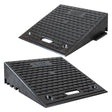
Pack of 2 Kerb Access Ramps - 6" Rise
Regular price
£39.99
Unit price
Unavailable

Pack of 2 Kerb Access Ramps - 6" Rise is backordered and will ship as soon as it is back in stock.
Why it works
Why buyers pick the 6-inch ramp

44-tonne load rating
Strong enough for cars, vans and light HGVs to drive straight over.

Chevron tread
A matt chevron face keeps grip underfoot and under tyre in the wet.

Tool-free linking
Male and female Strong-Fit connectors join ramps side by side to build any width.

Recycled PVC
Each ramp is moulded in the UK from recycled PVC.

Built for outdoors
Stands up to rain, frost and daily outdoor use without degrading.
Overview
Pack of 2 Kerb Access Ramps - 6" Rise - Overview
This pack gives you two heavy-duty ramps for a 152mm (6in) kerb or step. Moulded from recycled PVC with a chevron grip face, they link together to cover any width and suit wheelchairs, vehicles and wheeled equipment alike.
152mm
Rise (6in)
44tonnes
Load rating
545mm
Width per ramp
13kg
Weight per ramp
| Dimensions | |
|---|---|
| Rise | 152mm (6in) |
| Width per ramp | 545mm |
| Length per ramp | 515mm |
| Height per ramp | 152mm |
| Weight per ramp | 13kg |
| Details | |
|---|---|
| Pack quantity | 2 ramps |
| Load rating | Up to 44 tonnes |
| Colour | Natural black |
| Material | Recycled PVC |
| Fixing | 2 holes per ramp, up to 10mm bolts |
| Origin | Made in the UK |
In use
Where the 6-inch kerb ramp fits in
The 152mm rise ramp is built for anything that needs a smooth run up a kerb or step, from wheelchairs to work vehicles.
- Wheelchair and mobility-scooter access at kerbs and thresholds
- Cars, vans and light HGVs crossing driveways and yards
- Mowers, wheelbarrows and garden machinery over a step
- Wheelie bins, caravans, motorhomes and pushbikes across a kerb
Frequently asked questions
Will these ramps take my mobility scooter or wheelchair?
Will these ramps take my mobility scooter or wheelchair?
Yes. The chevron-pattern face gives grip for wheels of all kinds, and the 152mm rise is a gentle enough gradient for wheelchairs and mobility scooters to cross safely.
How heavy is each ramp to carry?
How heavy is each ramp to carry?
Each ramp weighs 13kg and has a moulded carry handle, so one person can lift and move it without help.
Can I bolt the ramps down permanently?
Can I bolt the ramps down permanently?
Yes. Each ramp has two fixing holes for concrete or tarmac bolts up to 10mm in diameter. They can also be left loose and moved between jobs.
What is the maximum weight the ramps can take?
What is the maximum weight the ramps can take?
Each ramp is rated to 44 tonnes, so cars, vans and light HGVs can drive over without any risk of crushing.
How do I cover a wider gap than one pack?
How do I cover a wider gap than one pack?
The ramps have male and female Strong-Fit connectors on the sides, so you can slot additional packs on to build a run of any width.
Will every ramp be exactly the same shade of black?
Will every ramp be exactly the same shade of black?
The ramps are moulded from recycled PVC, so the exact shade can vary slightly batch to batch, though the finish and performance stay the same.
Can these replace a dropped kerb?
Can these replace a dropped kerb?
On private land you own, yes - they are a lower-cost alternative to permanent kerb works. For a public highway, check with your local authority first.


